We offer professional scanning of minutes — digitisation of meeting minutes, board minutes, annual-meeting minutes and historical collections of minutes — into searchable PDF documents. We work with associations, congregations, municipalities, city archives, companies, museums and private individuals who want to make their minutes accessible and searchable digitally.
Whether the minutes are bound in old volumes, stapled, loose-leaf or held as loose sheets in an archive box, we have the right scanner and workflow for the job.
Non-destructive scanning of bound minute books
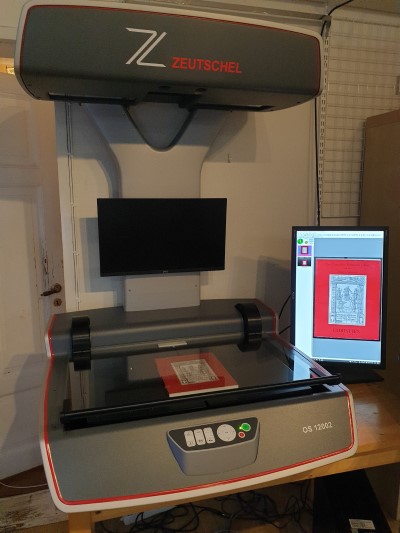
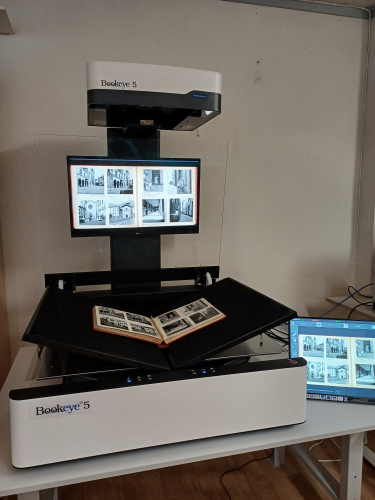
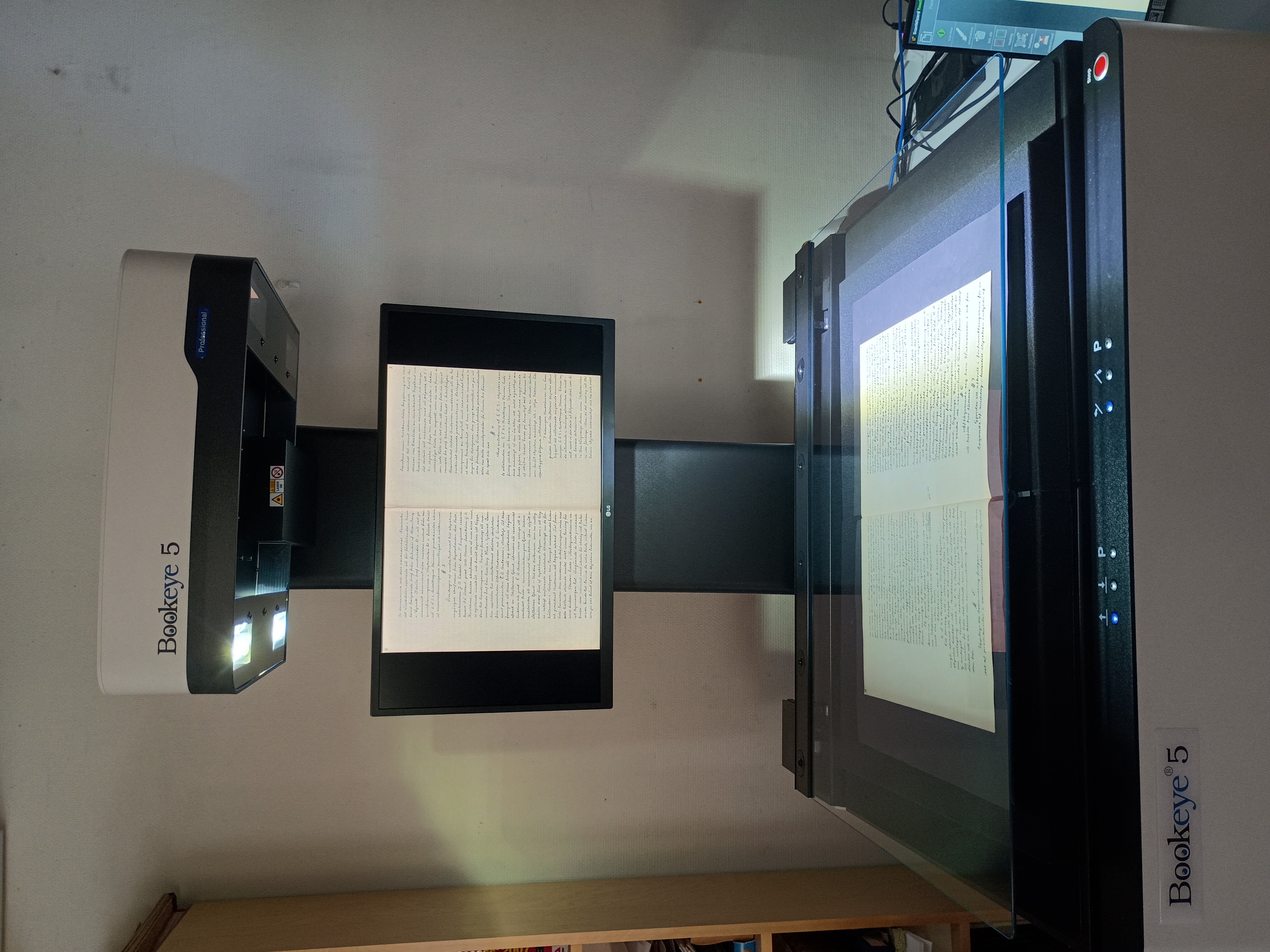
For historical, valuable or bound volumes of minutes that must not be damaged, we use our FADGI-calibrated overhead scanners, the Zeutschel OS 12002 (A2+) and the Image Access Bookeye 5 V1A (Archive) with a V-cradle. Both scanners handle delicate books and minutes up to A1+ size without forcing the binding apart, and without exposing the paper to strong light or heat.
The FADGI calibration (Federal Agencies Digital Guidelines Initiative) ensures that faint notes, pencil scribbles, light stamps and other details that would normally be lost in ordinary scanning are preserved in the image — something that is particularly important for archival material intended for long-term preservation.
Fast scanning of material that can be cut apart (document scanner)
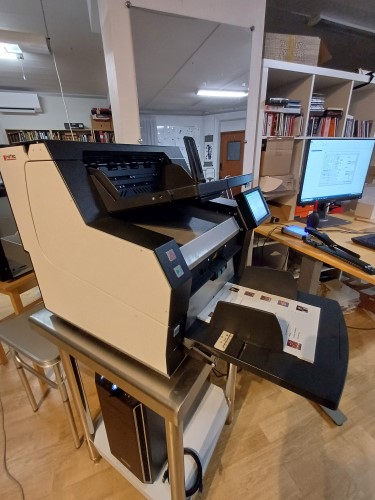
If the minutes are not bound, or if you allow the volumes to be cut apart, we can scan with our Inotec 6x1 document scanner, which is very fast and cost-effective. This one is FADGI-calibrated too.
Image processing
We can carry out bespoke image-processing operations at the pixel level by agreement.
Splitting of book spreads
When scanning bound minute books on an overhead scanner, each scanned image usually contains two book pages (a spread). We adjust the split line and carry out manual deskew (straightening) of the spreads before the automated splitting is performed, so that each page of the minutes becomes its own page in the PDF document with the correct orientation.
Division into separate minute documents
This is the heart of our service for scanning of minutes: we divide the scanned image stream into a separate PDF document per set of minutes. You decide whether each individual set of minutes should become its own file, or whether you would prefer, for example, one file per annual meeting, one file per board meeting, or one file per year/financial year.
The division points are set manually in a bespoke in-house app, so that the split is exactly right even when the minutes have no consistent structure. The division can be based on cover sheets, date stamps, numbers in the margin or other structure in the material.
Naming of finished minute documents
The finished PDF files are named to your requirements — for example Styrelseprotokoll_1956-03-14.pdf or Protokoll_1909_nr_01.pdf. Naming can be done:
- Manually by us, based on the date and type of minutes shown on the page
- From a template you provide
- From an Excel sheet with the desired file names
- AI-driven, by reading dates, numbers or other values directly from the scanned images
We can also deliver a tab-separated text file or Excel file with file name, date, type of minutes and other metadata as a register of the collection.
OCR and AI correction for searchable PDF files
Uncorrected batch OCR is normally included at no extra cost, so that the PDF files become full-text searchable. For handwritten minutes, plain OCR can be difficult, but in those cases we can instead index metadata (date, meeting number, meeting type) manually, so that the collection is still easy to search.
As an option we offer AI correction of the interpreted text — the whole text, or only the details that matter most for searching, such as names, dates and minute numbers.
AI reading is more reliable than script-driven field capture, which needs exact anchor words and fails when the wording changes between volumes. Particularly important fields are checked with extra care, and anything that does not add up I go through myself against the original image.
Delivery formats
We normally deliver in 300 dpi colour, which is recommended for historical minutes because the aged colour of the paper and any underlining are preserved. PDF is the standard format, but we can also deliver TIFF in archival quality in accordance with the archival requirements.
Delivery is made via encrypted Dropbox, an encrypted USB stick or on any medium of your choice. For larger projects, we can deliver on a rolling basis as volumes are completed.
Examples of completed assignments
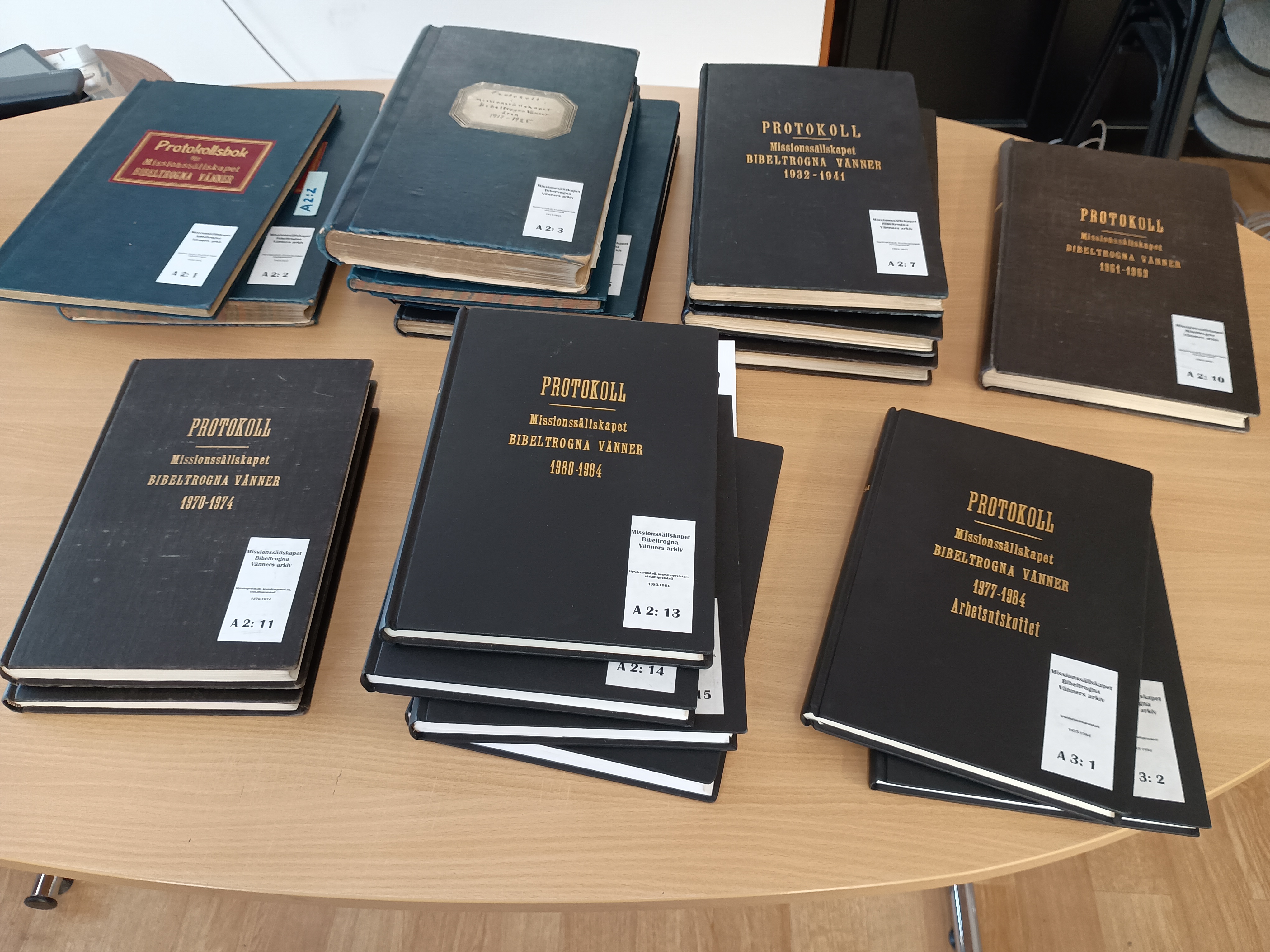
For ELM-BV (Evangelisk Luthersk Mission – Bibeltrogna Vänner) we have digitised 19 bound volumes of historical minutes from 1909–1999 – non-destructively on an overhead scanner, divided into one PDF document per set of minutes, named after their contents and made searchable through batch OCR. The assignment began as a trial and, after the result was approved, became a full assignment.
GDPR and personal data
Historical minutes often contain personal data. We have procedures for the secure handling of material containing personal data and sign a data processing agreement in accordance with GDPR. Contact us and we will explain how we safeguard the material during the assignment.
Request a quote
Send a few sample images of the material (mobile photos of a couple of spreads are fine) and a short description of the scope, and we will come back to you with a quote within an hour or so. For larger or specialist assignments, you are warmly welcome to visit the service bureau for a review on site.