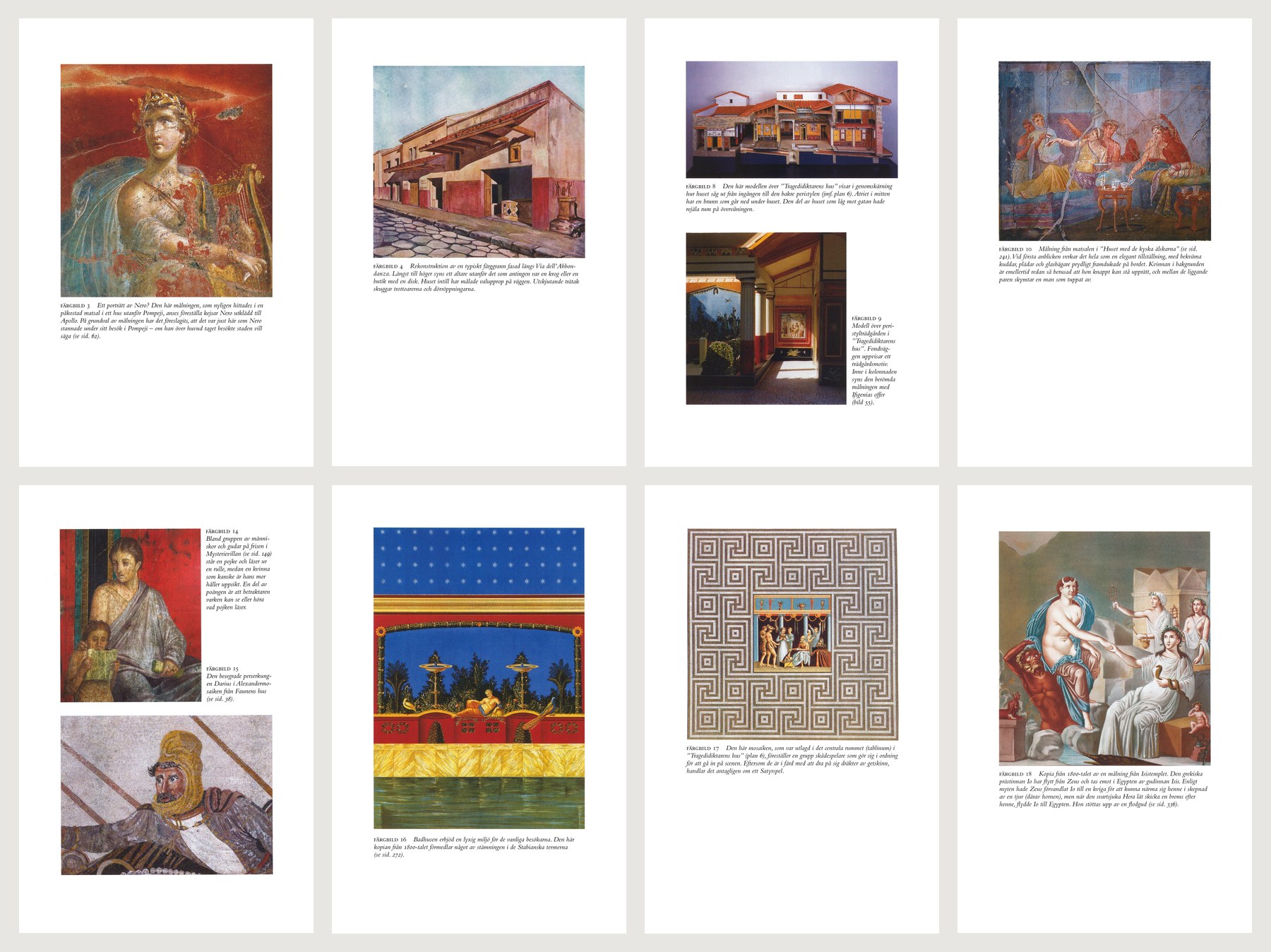
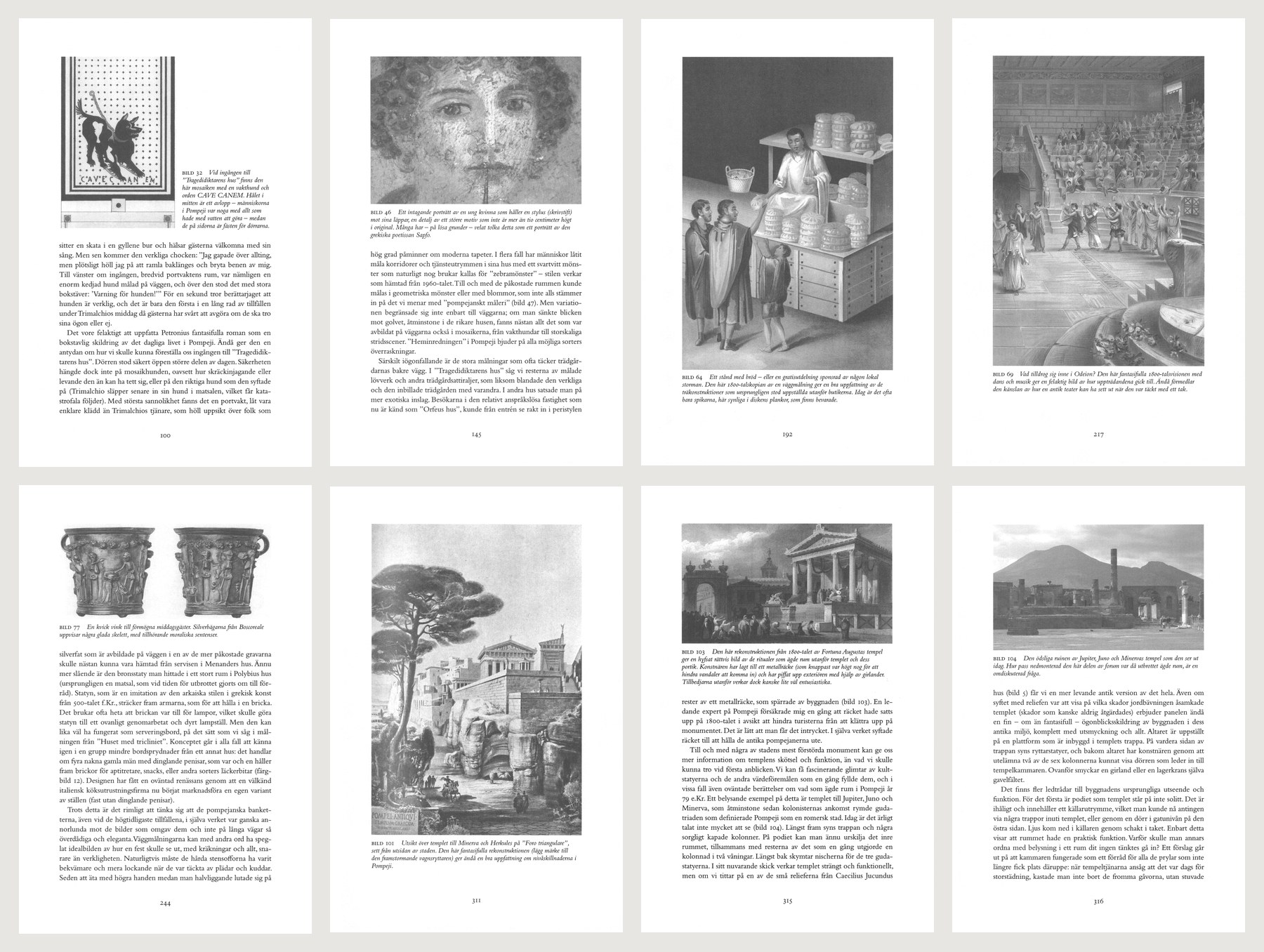
I have scanned Mary Beard's book Pompeji – livet i en romersk stad and prepared it for reprinting. The book has 420 pages, 16 of them with colour plates, and around 140 black-and-white images — photographs, engravings, maps and plans. It was cut open at the spine and the pages were fed as loose sheets through our Inotec Scamax 6x1 at 600 dpi in colour. Every page was then processed so that it prints clean and even.
White background. The tone of the paper — yellowish on the text pages and bluish on the paper of the colour plates — has been removed, so that every page has a completely white background. In the images the dark and mid tones are unchanged; only the very lightest areas have been toned towards white, so that the images do not get a grey frame against the white paper.
Darkening of text. The greyish text has been darkened so that it prints a deep, even black. The images are protected and are not affected by the darkening.
Centring. Every page is centred on the page number at the foot — a centre line through the pagination — and the pages without a page number, such as the colour plates, on the edges of the text and image. The strip of about 2 mm that was lost when the book was cut open has been added back as a white margin at the spine, so that the pages have their original width. Captions that sat askew relative to their images have been straightened, and dust and specks in the margins have been removed. Finally, I went through every page by hand.
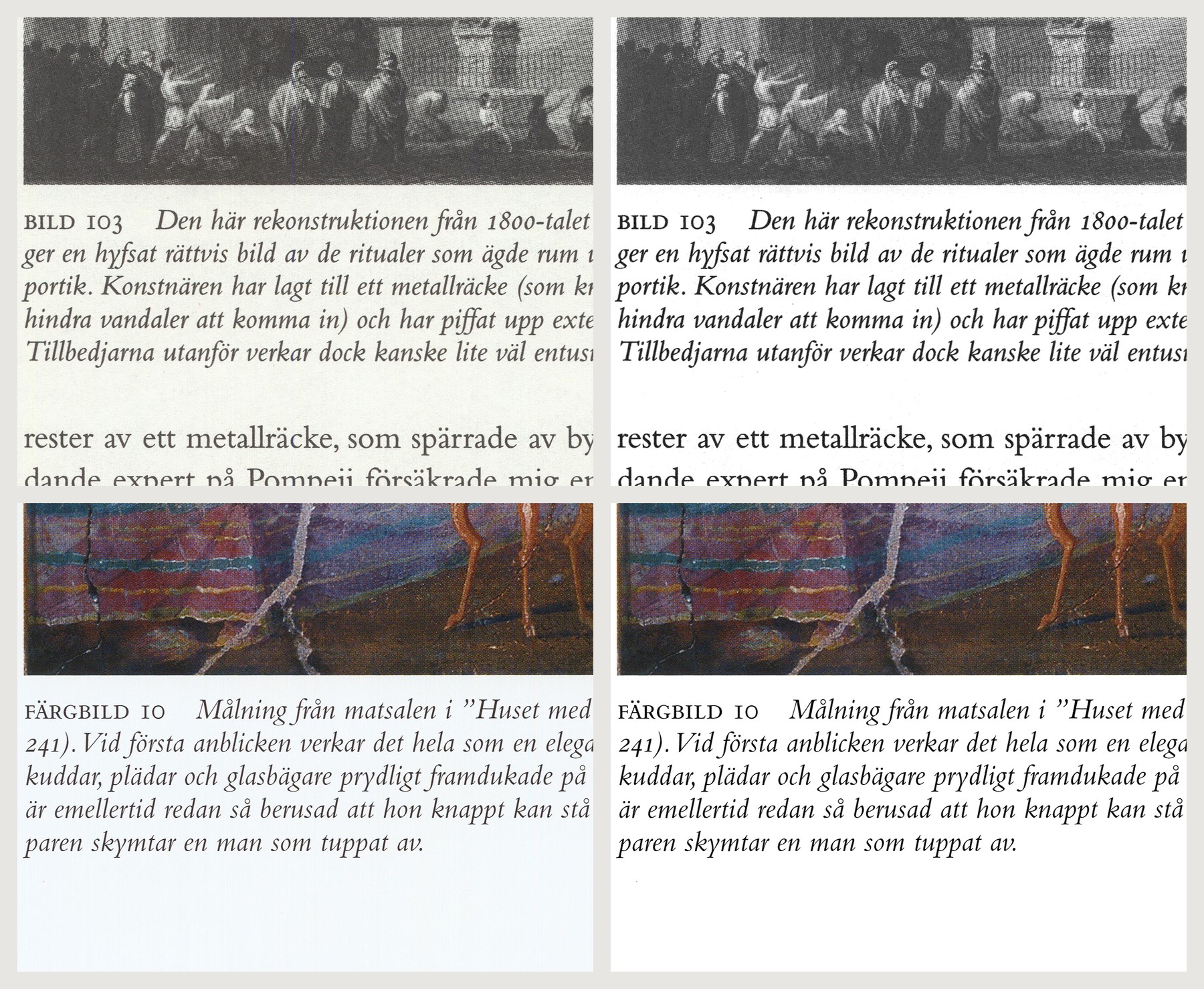
The delivery is adapted to the content, all at 600 dpi: bitmap (black and white, CCITT G4) for the text, greyscale for the black-and-white images and colour with an sRGB profile for the colour plates. The images were also delivered in two versions — descreened, to avoid moiré in the new print run, and with the book's original halftone screen intact.
Read more about our image processing for reprinting — descreening, white background, darkened text and centring of books that are to be printed again.